The Heavens
Declare
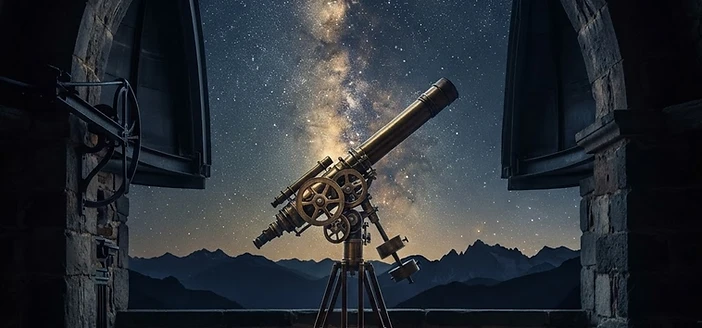
A common story of our age says that science and faith are enemies, and that the more we learn of the cosmos, the less room there is for God. But some of the greatest minds who have ever peered through a telescope or read the code of a cell tell a different story — that the deeper they looked, the more the creation seemed to point beyond itself, to a Mind, and at last to Christ.

Wonder Is Not Yet Faith
Before we tell these stories, one honest word. The heavens declare the glory of God, but wonder alone is not yet faith. Creation can draw the heart toward its Maker — or it can be examined, admired, and finally left behind. The same galaxies, the same living creatures, the same cells that led some scientists to the Cross led others to a quieter doubt.
Charles Darwin is the cautionary reminder. He was a man of genuine wonder, who spent a lifetime marveling at the living world. Yet his biographers — and his own Autobiography — record that the faith of his youth slowly left him, pressed down by private grief and by a conviction that design could be explained without a Designer. Darwin did not come to Christ. His story reminds us that creation testifies, but it does not compel. The testimony must be received.
It is worth saying plainly, because a famous story about Darwin still circulates — and the truth matters to those of us who stake our hope on it. In 1915, thirty-three years after Darwin's death, an evangelist named Elizabeth Cotton, Lady Hope, claimed she had visited him in the autumn of 1881. She said she found him reading the letter to the Hebrews, full of regret over what his ideas had set loose in the world, and that he asked her to speak to his neighbors about "Christ Jesus and His salvation."
The story is moving, and it has been told and retold in believing circles for a century. But it does not stand up to honest examination. Even if such a visit happened, it was months before Darwin's death, not on his deathbed — he was never bedridden for long before the end. The people who were actually with him said otherwise. His daughter Henrietta, present at his death, wrote that Lady Hope "was not present during his last illness, or any illness," that she did not believe her father had ever seen the woman, and that "he never recanted any of his scientific views, either then or earlier." His son Francis called the account "quite untrue." The letters Darwin wrote in his final years show no turn toward faith and no retreat from his work.
What is remarkable is that this conclusion is not merely the verdict of his secular biographers. Even organizations devoted to opposing his theory — such as Answers in Genesis — have studied the evidence and warned their own people that the story cannot be supported and should not be used. The historian James Moore, who traced the legend in detail, treats it as apocryphal: wishful thinking that spread because it was comforting, not because it was true.
We say all of this not to diminish Darwin, but to honor Christ. A faith that needs a fabricated deathbed conversion to prop it up is not the faith the apostles handed down. The heavens declare the glory of God whether or not any single scientist bows — and they declare it well enough that we need not invent a repentance that never happened. The truth is sturdier than the legend.
The heavens declare the glory of God, and the sky above proclaims his handiwork. Day to day pours out speech, and night to night reveals knowledge.
What follows are not proofs. They are testimonies — men who began as unbelievers, gave their lives to the study of creation, and found that the more they learned, the more the creation kept pointing somewhere beyond itself. The stars and the cell became, for them, not a substitute for God but a road that led to Him.
Allan Sandage & the Complexity of All Things
Allan Sandage
1936 – 2010
Observational astronomy · Edwin Hubble's successor
Allan Sandage was one of the greatest observational astronomers of the twentieth century. As a young man he was chosen by Edwin Hubble himself to carry on the work of measuring the expansion and age of the universe. He spent his career counting distant galaxies and refining the cosmic distance scale — and for the first half of his life he was, by his own account, an agnostic.
The turning came not in spite of his science but through it. After decades spent inside the cathedral of the cosmos, Sandage came to a conclusion he put plainly: "It was my science that drove me to the conclusion that the world is much more complicated than can be explained by science." The order, the beauty, the sheer improbability of a universe that could be understood at all pressed him toward a Mind behind the math.
In middle age he became a Christian, and for the rest of his life spoke openly of faith as the completion, not the contradiction, of his astronomy. He did not claim the stars proved God. He said only that the more he saw of them, the less the world looked like an accident — and the more it looked like a creation, awaiting its Creator.
When I look at your heavens, the work of your fingers, the moon and the stars, which you have set in place, what is man that you are mindful of him, and the son of man that you care for him?
Francis Collins & the Language of the Cell
Francis Collins
1950 – present
Medical genetics · Leader of the Human Genome Project
Francis Collins is the physician-geneticist who led the Human Genome Project, the international effort that first read the entire sequence of human DNA. He grew up on a Virginia farm without any particular faith, and by graduate school had settled into a confident atheism — he regarded belief as superstition fit only for those who had not thought hard enough.
What unsettled him was not a sermon but his patients. As a young doctor he watched believers face suffering with a peace he could not account for and could not produce in himself. One dying patient asked him simply what he believed — and he discovered he had no answer. So he went looking for one, and a friend handed him C. S. Lewis's Mere Christianity.
Lewis's argument about the Moral Law — that every culture, across all history, carries a sense of right and wrong that no law of nature can explain — struck him like a thunderclap. Then came the genome. Reading the code of life, Collins saw information, language, a script more elegant than anything human engineers had written. He came to faith in his twenties, and later wrote a book with a title that says it all: The Language of God. For Collins, the cell was not a machine that made God unnecessary — it was a letter, written in His hand.
I praise you, for I am fearfully and wonderfully made. Wonderful are your works; my soul knows it very well.
Hugh Ross & the Beginning of All Things
Hugh Ross
1945 – present
Astrophysics & cosmology · Founder of Reasons to Believe
Hugh Ross grew up in a non-religious home in Vancouver, Canada, and fell in love with the stars at the age of seven. By his teens he was studying cosmology on his own, and the more he learned, the more a single question would not leave him alone: where did all this come from?
The evidence for a beginning — a universe that has not always existed but erupted into being at a definite point in the past — pushed him toward a Cause that stood outside of time, space, and matter. By seventeen, he had reasoned his way to a Creator. But he wanted to know whether that Creator had spoken, and so he did something few teenagers do: he began reading the sacred texts of the world's religions. He found that only one of them described a universe with a beginning, stretched out like a tent, governed by fixed laws, and shaped to sustain life — and it was the Bible. He came to Christ as a teenager, and later founded Reasons to Believe, spending his life arguing that the cosmos is a sermon preached in light-years.
In the beginning, God created the heavens and the earth.
A Chorus of Witnesses
Long before our own age, the men who built the foundations of modern science were looking up — and finding, again and again, that the deeper they looked, the more the heavens seemed to whisper of a Mind. These are their words, handed down across the centuries — a chorus of witnesses rising from the laboratories and observatories of the world.

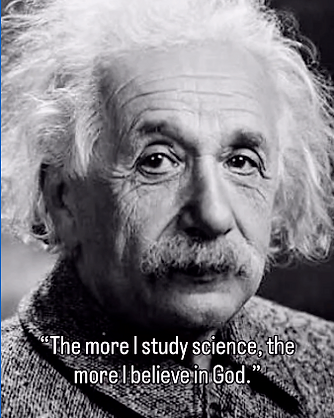
Albert Einstein
1879 – 1955
Theoretical physics · Relativity
“The more I study science, the more I believe in God.”

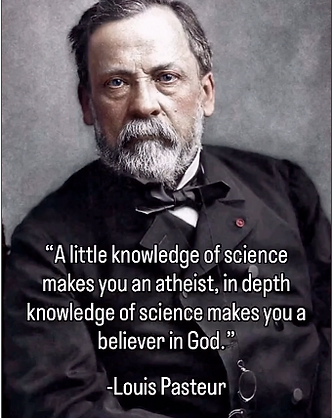
Louis Pasteur
1822 – 1895
Microbiology · Germ theory
“A little knowledge of science makes you an atheist; in-depth knowledge of science makes you a believer in God.”

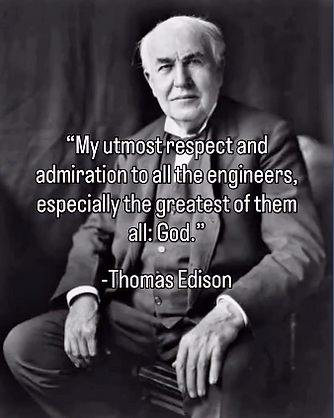
Thomas Edison
1847 – 1931
Invention · The phonograph, the light bulb
“My utmost respect and admiration to all the engineers, especially the greatest of them all: God.”

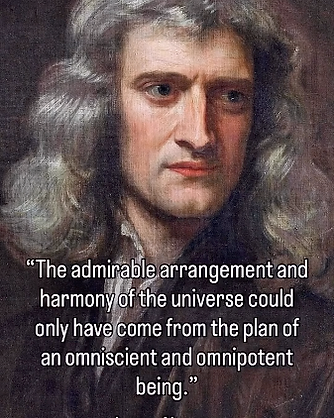
Isaac Newton
1643 – 1727
Physics & mathematics · Principia
“The admirable arrangement and harmony of the universe could only have come from the plan of an omniscient and omnipotent being.”

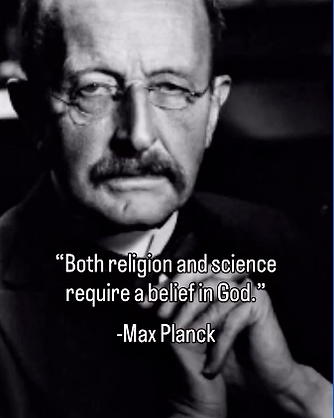
Max Planck
1858 – 1947
Quantum physics · Founder of quantum theory
“Both religion and science require a belief in God.”

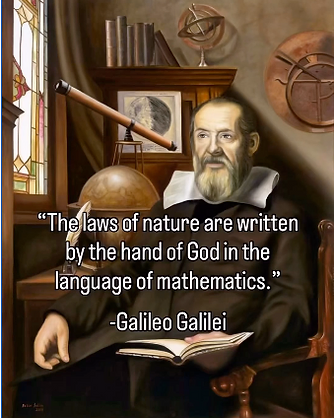
Galileo Galilei
1564 – 1642
Astronomy · Father of observational astronomy
“The laws of nature are written by the hand of God in the language of mathematics.”

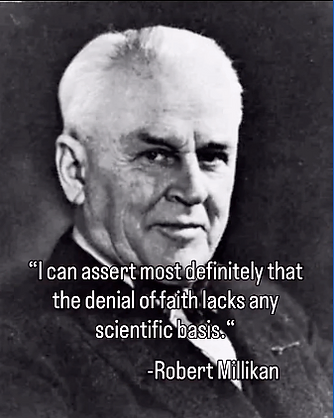
Robert Millikan
1868 – 1953
Experimental physics · The electron charge
“I can assert most definitely that the denial of faith lacks any scientific basis.”
Some of these sayings come to us preserved in popular retelling, distilled from longer letters, lectures, and reflections. Whatever their exact phrasing, they echo what these men wrote and believed across a lifetime: that the book of nature and the Book of God are read with the same wondering eye.
What They Found, and Whom They Found
Notice what these three did not say. They did not claim that science had proved God, as one proves a theorem. They did not say the stars or the cell had forced them to believe. They said something humbler — that the more deeply they studied creation, the more it refused to be explained on its own terms, and the more it seemed to whisper of a Mind behind it all.
And for each of them, the whisper did not stop at a generic Creator. It led to a person. Sandage, Collins, and Ross did not merely become theists. They became Christians — readers of Scripture, worshipers of Christ. Creation was the road; Christ was the destination. The heavens declared the glory of God, and that glory, the New Testament says, shines most brightly in a face.
For God, who said, "Let light shine out of darkness," has shone in our hearts to give the light of the knowledge of the glory of God in the face of Jesus Christ.
This is the older, wiser harmony: faith seeking understanding, and understanding returning the favor. The scientist who kneels before a galaxy and the saint who kneels before a cross are not enemies. They are both looking up. And when the looking is honest, the heavens and the Cross begin to point the same direction — toward the One in whom all things hold together.
The same stars that moved Allan Sandage to his knees are overhead tonight. The same code that spoke Christ to Francis Collins is written in every cell of your body. Creation is still preaching. The question is whether we will listen — and whether we will let it lead us all the way to the One it has been describing all along.
Behold the One the Heavens Declare Back to the Journey