
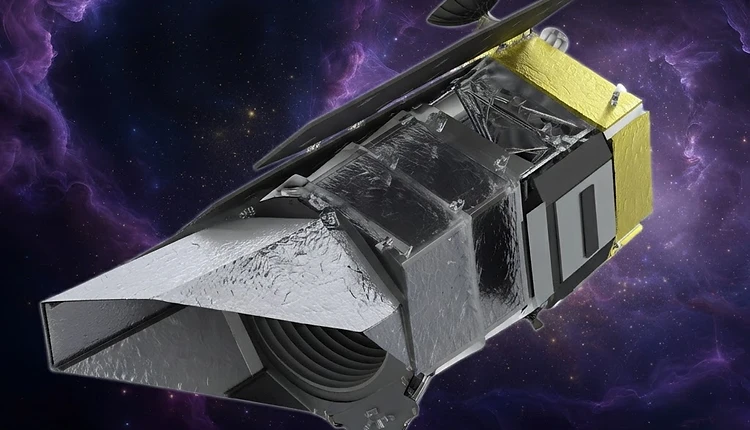
On the morning of August 30, 2026, a SpaceX Falcon Heavy rocket is scheduled to lift off from NASA's Kennedy Space Center, carrying a new set of eyes into the heavens. The Nancy Grace Roman Space Telescope — named for the woman often called the "mother of Hubble" — is about to open a window on the cosmos wider than anything we have ever pointed at the sky.
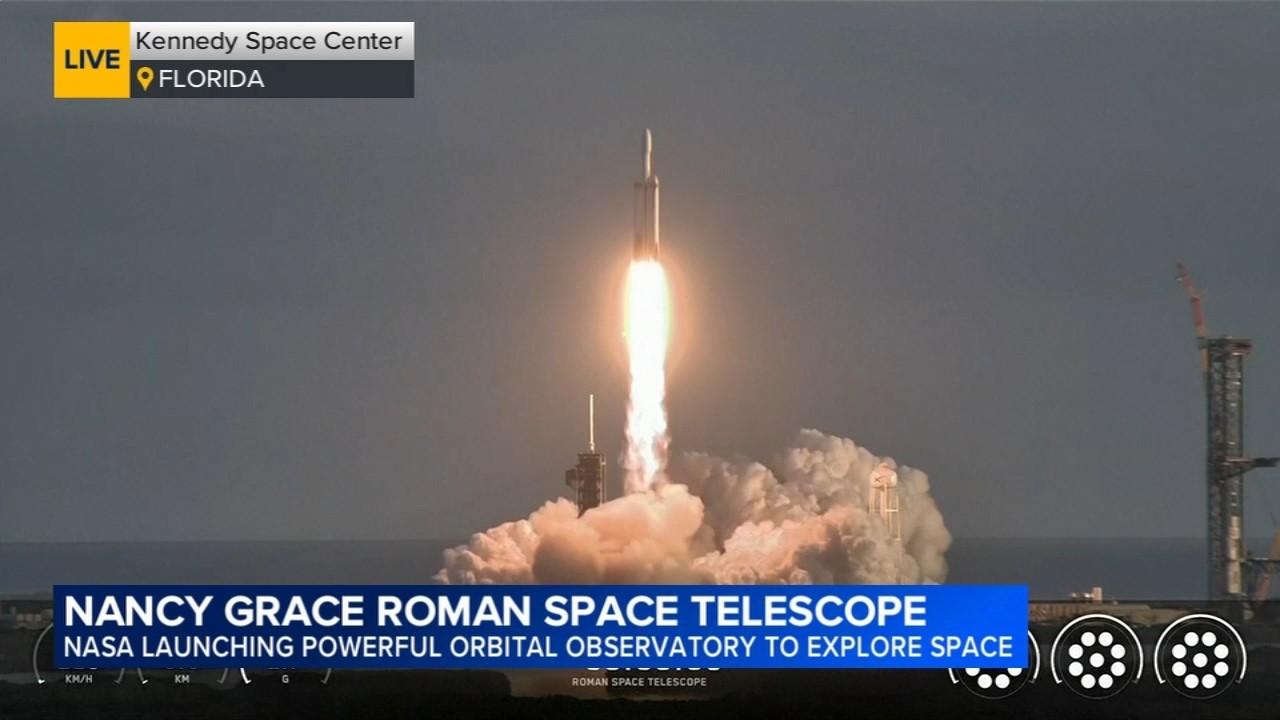

It is easy to grow numb to launches. Rockets climb and fade, and the news cycle moves on. But every so often, an instrument arrives that does not merely add to what we know — it changes the kind of questions we are able to ask. Roman is one of those instruments.
What Is the Roman Space Telescope?
The Roman Space Telescope is NASA's next flagship observatory after the James Webb Space Telescope. It carries the same 7.9-foot primary mirror as the Hubble Space Telescope — meaning it sees the universe with Hubble's legendary sharpness. But where Hubble has spent more than thirty years photographing tiny patches of sky, one postage stamp at a time, Roman was built to see wide.
How wide? Its field of view is roughly one hundred times larger than Hubble's. In practical terms: Hubble has observed about one-tenth of one percent of the night sky over its entire lifetime. Roman, in theory, could survey the whole sky at the same resolution.
Think of it this way. If Hubble is a spyglass — exquisite, focused, peering deep into a single distant point — Roman is a panoramic camera. One sweeps wide. The other peers deep. Together, they give us something closer to a complete portrait of the heavens than humanity has ever possessed.
How It Improves on Hubble
Hubble revolutionized astronomy. It is not an exaggeration to say that nearly every image of a distant galaxy or shimmering nebula burned into the public imagination over the past three decades came from Hubble's cameras. But Hubble was designed to look narrowly and deeply — to stare at small regions of space for long exposures, pulling faint light out of the dark.
Roman keeps that sharpness but trades the narrow stare for a wide embrace. Its Wide Field Instrument matches Hubble's sensitivity while capturing a patch of sky a hundred times larger in a single frame. The result is a telescope that can do in one pointing what would have taken Hubble hundreds of separate images stitched together.
This is not a replacement for Hubble. It is a complement — a partner that fills in the wide canvas around Hubble's finest brushstrokes.
What Roman Will Catalogue
Roman's mission is, in part, a census. It will catalogue stars, galaxies, and worlds on a scale that borders on the unimaginable.
Over its lifetime, the telescope is expected to measure light from as many as a billion galaxies. It will map the structure of the universe not by studying a few objects in detail, but by counting and measuring vast numbers of them — the way a census tells you more about a nation than any single biography could.
It will also hunt for planets. Roman's Coronagraph Instrument is designed to block the blinding glare of stars so that faint, hidden worlds become visible for the first time. Where nearly every exoplanet discovered so far has been found indirectly — by watching a star dim or wobble — Roman will attempt to photograph planets directly. It is expected to detect worlds a hundred million times fainter than the stars they orbit.
And then there are the serendipities. Every time we build a telescope with a wider view, we find things we were not looking for. Roman will almost certainly capture objects no one predicted — dying stars, wandering planets, galaxy clusters, transient flashes — simply because it is looking at so much sky at once.
Photos for Everyone
Perhaps the most quietly remarkable thing about Roman is this: its images will not be locked away.
Roman's data will be made publicly available to researchers and, ultimately, to the world. The photos it takes — sweeping fields of galaxies, clouds of stellar gas, pinpoints of light from the edges of the observable universe — will be released for anyone to see, study, and wonder over.
In a culture that hoards images behind paywalls and algorithms, Roman will give its pictures away. A child with a laptop in any country on earth will be able to look at the same galaxies that a tenured astronomer studies. The heavens, as the psalmist said, are telling a story — and Roman will hand the photographs to anyone who wants to read along.
What Can We Expect?
When Roman begins science operations — expected in early 2027 — the first images will likely be staggering. Not because they will show anything more beautiful than what Hubble or Webb have already shown us, but because there will be so much more of it. A single Roman frame may contain thousands of galaxies where a Hubble image held a few dozen.
Expect new catalogues. Expect surprises. Expect the slow, humbling realization that the universe is even more crowded with light than we thought.
Expect, too, the questions to deepen. Every telescope answers old mysteries and uncovers new ones. Roman will help measure dark matter and dark energy — the vast, unseen substance and force that shape the cosmos — and in doing so, it will likely remind us how little we truly understand about what holds the heavens together.
And expect wonder. That is the one thing every new window on the sky has delivered, from Galileo's first tube of glass to Webb's golden mirror. We build these instruments to learn, and we learn. But what we receive, always, is awe.
The Heavens Are Telling
The psalmist did not need a telescope to know what the sky was doing.
The heavens declare the glory of God, and the sky above proclaims his handiwork. — Psalm 19:1
But he would not have been surprised that we keep building them. There is something in the human heart that cannot look at a star-filled sky and remain silent. We point lenses at the darkness because we were made to look, and to look closely, and to tell one another what we have seen.
The Roman Space Telescope will not prove God. It was not built to. But every wider view it captures, every galaxy it counts, every hidden world it reveals, will say what the heavens have always said: there is a Maker, and His imagination is greater than ours.
We do not worship the telescope. We do not worship the images. We worship the One whose glory the heavens have been declaring since the fourth day, when He set the lights in the firmament and called them good.
Roman will open a wider window. Look through it. And let the view turn your eyes upward — not toward the stars themselves, but toward the God who scattered them like seeds across the dark.