The Ground We Thought Was Solid
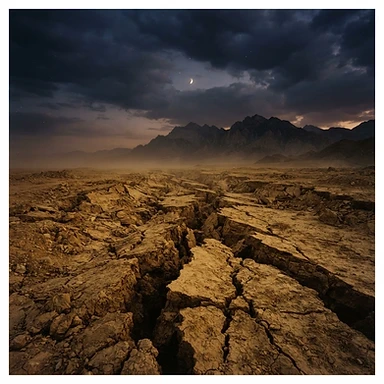
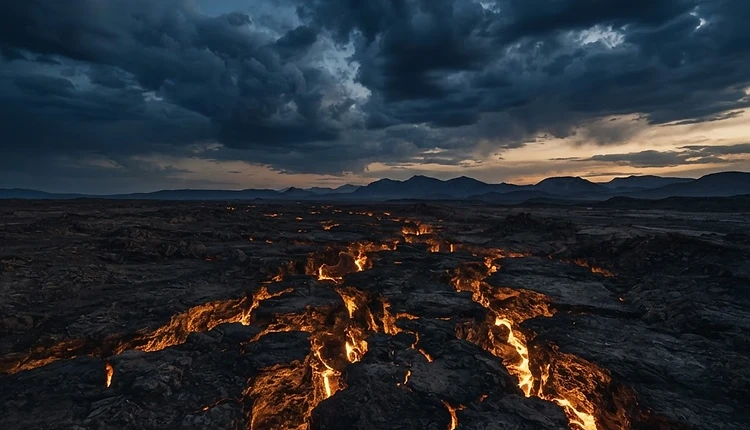
We build our lives on an assumption so basic we never name it: the ground beneath our feet is solid. Earthquakes shatter that assumption. Without warning, the very thing we stood on betrays us — a wall cracks, a road folds, a coastline lifts or sinks, and for a few seconds the whole world reminds us that "solid ground" is, in the end, a kind of trust.
Jesus spoke about earthquakes. And the way He spoke about them is one of the most sobering — and most hopeful — images in all of Scripture: He called them birth pangs.
What Jesus Actually Said
In His teaching on the end of the age, Jesus warned His disciples not to be alarmed by wars, famines, and earthquakes, because these would come — and then He chose a specific word:
"Nation will rise against nation, and kingdom against kingdom, and there will be famines and earthquakes in various places. All these are but the beginning of the birth pains." — Matthew 24:7-8
Mark records the same teaching:
"For nation will rise against nation, and kingdom against kingdom. And there will be earthquakes in various places; there will also be famines. These are but the beginning of the birth pains." — Mark 13:8
The word in the original is ōdinōn — the pains of childbirth. It is not a word of random destruction. It is a word of process. A woman in labor hurts, and the pain increases, and the pain is real — but the pain is not the end of the story. The pain is the road to something being born.
Why That Image Matters
We usually hear about "the end of the world" as though it meant annihilation — everything simply shutting down, like a light going out. Jesus refuses that picture. The image He gives is labor. Labor has a direction. Labor has an outcome. Labor ends in joy.
Paul uses the same image for the whole creation:
"We know that the whole creation has been groaning together in the pains of childbirth until now." — Romans 8:22
The earth itself, Paul says, is in labor. Earthquakes are not the planet dying; they are the planet groaning — waiting, with us, for the revealing of the sons of God, for the liberty of the glory that is coming.
So when Jesus puts earthquakes under the heading of "birth pains," He is doing two things at once. He is telling us the pain will be real, and He is telling us the pain will be worth it.
Do the Birth Pangs Increase?
Here we want to be honest and careful, because both the science and the Scripture deserve our respect.
Jesus' choice of the childbirth image carries a built-in expectation: birth pangs increase. They come more frequently and with greater intensity as the birth draws near. That is simply how labor works, and it is the picture Jesus deliberately chose. So we are not wrong to listen for an escalating pattern in the signs of the age. That is what He told us to expect.
At the same time, we must not turn that image into a formula for date-setting. Jesus immediately went on to say, "Concerning that day and hour no one knows" (Matthew 24:36). The increase of birth pains tells us the character of the season — labor, not leisure; watchfulness, not sleep — but it does not hand us a date. No earthquake, and no cluster of earthquakes, lets us circle a calendar.
As for the data itself, we have to measure the right thing. The earth produces hundreds of thousands of earthquakes every year, but the overwhelming majority are tiny — too small to feel and too small to matter to anyone but a seismograph. If we count all of them, the number recorded has risen sharply over the past century, but almost entirely because our instruments and reporting have improved, not because the ground is shaking more. So let us measure what Jesus' listeners would have experienced as real: the larger earthquakes, magnitude 6 and above on the Richter scale. A magnitude 6 quake can topple buildings; a magnitude 7 can level a city; a magnitude 8 can shift the very axis of the planet. These are the quakes that make history. And because they are large enough to be felt across whole regions, we have a fairly trustworthy record of them for more than a century — undistorted by the detection improvements that flood the smaller-quake counts.
Measured that way, the picture is sober and honest. The world averages roughly a hundred and fifty earthquakes of magnitude 6 or greater each year — about a dozen of them magnitude 7, and usually one near magnitude 8. Both the number of these larger quakes and their intensity have held remarkably steady over the long instrumental record. There are clusters and quiet stretches — the years around 2010 and 2011 felt almost relentless, with Haiti, Chile, Christchurch, and the great Tōhoku quake of Japan — but seismologists generally read these as the natural statistical clustering of an essentially random process, not the beginning of a confirmed long-term climb. We are not seeing magnitude 8 and 9 events arrive with a frequency that would let us say the birth is upon us.
So the honest picture is layered: when we measure the earthquakes that actually shake the world — magnitude 6 and above — both their number and their intensity are steady rather than clearly escalating, even though the experience of any hard-hit region is desperately real. What we can say is what Jesus said — the pains come in various places, the age is moving toward its birth, and the character of the season is watchfulness.
And that is enough. Jesus did not give us seismology; He gave us a posture.
The Meaning of the Groaning
What is the ground itself saying when it shakes?
First, it is saying that this world is not the final one. The ground is not permanent. "Yet once more I will shake not only the earth but also the heavens," the writer of Hebrews quotes, "so that the things that cannot be shaken may remain" (Hebrews 12:26-27). Earthquakes are a visible sermon that the created order is passing through judgment toward renewal — that what can be shaken will be shaken, so that what is eternal can stand.
Second, it is saying that creation is waiting. Romans 8 tells us the creation was subjected to futility — not willingly, but in hope. The earthquakes are part of that futility, part of the groan. The earth itself is leaning forward, longing for the day it will be set free from its bondage to corruption and brought into the freedom of the glory of the children of God.
Third — and this is where the image becomes good news — it is saying that the groaning has an end. "A woman giving birth to a child has pain because her time has come; but when her baby is born she forgets the anguish because of her joy that a child is born into the world" (John 16:21). The earth will not groan forever. The labor will deliver.
How Then Shall We Live
If earthquakes are birth pangs, three things follow for how we live.
We watch, but we do not panic. The woman in labor knows the pain is coming and does not run from it — she braces for it and breathes through it, because she knows what it is for. We are told the signs will come; we are told not to be alarmed. Watchfulness in Christ is calm, not anxious.
We do not date-set. No increase of earthquakes — however real the trend, however frightening a particular quake — gives us the day or the hour. Anyone who claims to read the date from the seismograph is reading something Jesus did not write there. "The beginning of the birth pains" is a season, not a deadline.
We live toward the birth, not the pain. The point of birth pangs is the child. The point of all creation's groaning is the return of Christ and the renewal of all things. The earthquake is not the point. The kingdom that cannot be shaken is the point. "Since we are receiving a kingdom that cannot be shaken, let us be grateful, and so worship God acceptably with reverence and awe" (Hebrews 12:28).
The Ground That Will Not Shake
The next time the news reports a quake somewhere in the world, do not simply hear statistics. Hear a groan. The earth itself is crying out that something is being born — that history is in labor, that the return of Christ is the delivery all of creation is waiting for.
And remember where you stand. The same Lord who told us the earth would groan has promised us a kingdom that cannot be shaken. We who are in Christ are not standing on the ground that is passing away. We are standing on Him — the Rock that the builders rejected, the stone not cut by human hands that grows until it fills the whole earth, the unshakable ground on which the whole shaking world will one day rest.
The birth pangs will come. They may increase. But the Child has already been born once, in a manger, to die and rise — and He will come again. And when He does, the groaning of creation will turn, in a single moment, into the cry of new life.
That is what the earthquakes are for.