A Sight That Stops You
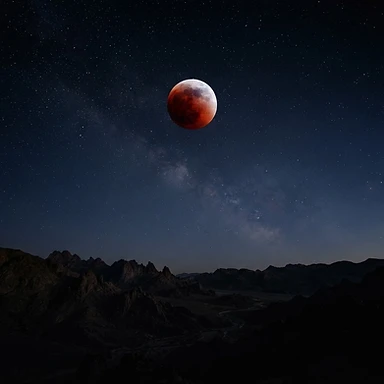
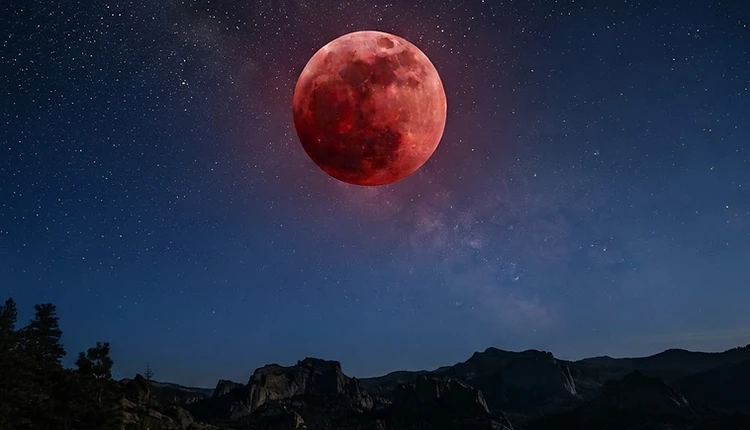
There is something unmistakable about a blood moon. The familiar white disc does not dim or vanish the way it does in an ordinary eclipse — it turns red. Rust-red, copper-red, sometimes the deep maroon of old wine. For an hour or more, the night sky holds a lamp that looks like it has been dipped in fire, and anyone who steps outside to look up feels it: a stillness, a strange weight, the sense that something is being said.
It is not a new feeling. Long before telescopes, people who saw the moon turn blood-red knew they were witnessing something rare. And Scripture, in a few unforgettable lines, gave that wonder a name.
What Is Actually Happening
A blood moon is a total lunar eclipse. The earth slides exactly between the sun and the moon, and the moon passes through the earth's shadow. If the three were perfectly aligned every month we would see one constantly, but the moon's orbit is tilted just enough that most months the shadow misses it entirely. When the alignment does come together, the moon is swallowed by the dark — and then, instead of disappearing, it glows red.
The reason is one of the most beautiful facts in astronomy. The sunlight that reaches the moon during a total eclipse has already passed through the ring of earth's atmosphere — every sunrise and sunset on the planet, all at once, wrapped around the world and bent toward the moon. The atmosphere scatters the blue light away (the same scattering that makes our daytime sky blue) and lets the red and orange pass through. So the color you see on a blood moon is, quite literally, the combined light of every dawn and dusk on earth, projected onto the moon and reflected back to you.
It is not an omen of violence. It is the earth's own shadow, painted by the earth's own light.
When Scripture Speaks of Blood Moons
The Bible does mention the moon turning to blood — and the words are striking enough that we should read them carefully, not rush past them.
"The sun shall be turned to darkness, and the moon to blood, before the great and awesome day of the Lord comes." — Joel 2:31
Joel spoke it as a warning of the day of the Lord — a day of judgment and deliverance, when God would act in power. The image is not random: the lights in the sky, Genesis tells us, were given "for signs and for seasons" (Genesis 1:14), and the prophets often reached for cosmic language to describe God breaking into history.
But the most important thing Scripture does with this verse is found in Acts 2. On the day of Pentecost, Peter stands up to explain the outpouring of the Holy Spirit, and he quotes Joel directly:
"This is what was uttered through the prophet Joel... The sun shall be turned to darkness and the moon to blood, before the day of the Lord comes, the great and magnificent day. And it shall come to pass that everyone who calls on the name of the Lord shall be saved." — Acts 2:16, 20-21
Peter is saying: the sign has begun. The day Joel promised is here. The Spirit has been poured out, the resurrection has happened, the age of salvation has dawned — and now every person who calls on the name of the Lord will be saved. The blood moon of Joel is not a future alarm clock; it is a pointer to the era that began when Christ rose from the dead and sent His Spirit.
John sees the same language in Revelation, in the opening of the sixth seal:
"The sun became black as sackcloth... and the full moon became like blood." — Revelation 6:12
Revelation's signs are sweeping and symbolic, meant to show the spiritual reality behind history, not to be decoded into a timetable. The darkened sun and blood-red moon announce that the created order itself testifies to the gravity of God's judgment and the shaking of all that is unstable. They do not give us a date. They give us a posture.
How to Read the Sign Without Fear
Here is where we need care, because it is easy to get this wrong in either direction.
We are not to treat a blood moon as a secret code predicting a specific disaster or the exact date of Christ's return. Scripture is explicit that no one knows that day or hour (Matthew 24:36), and the prophets' cosmic signs point to the kind of event — God acting in power to judge and save — not to a date on a calendar. Anyone who sells a blood moon as a countdown clock is selling something Scripture does not.
And we are not to fall into astrology. The moon turning red is a real, physical event with a known cause, not a mystical force governing your life. The heavens declare the glory of God (Psalm 19:1); they do not dictate your destiny.
But we are also not to grow cold and pretend the sign means nothing. When the moon turns the color of blood, the same God who said "let there be lights for signs" is reminding us that history has a destination. The day of the Lord is real. Christ has already come once — in humility, to die — and He will come again in glory. The sign in the sky is a call to readiness, not to panic: a prompt to make sure we are among those who call on the name of the Lord.
Two Moons, One Meaning
Think of it this way. Every month the moon shines its ordinary silver-white light, and we barely notice. Then, in the slow geometry of an eclipse, the earth's shadow falls across it and the white turns to red — and for an hour the whole world looks up.
The change of color is not a threat. It is an interruption. It interrupts our assumption that the sky will always look the same, that history will just keep going, that we can put off the question of our souls indefinitely. For one night the heavens themselves say: something is coming that is greater than the ordinary.
And the One who is coming has already come. The same Lord before whom the moon will turn to blood is the One who shed His own blood to make us ready. The sign does not point to fear; it points to Him.
Look Up, and Look to Him
The next time a blood moon rises, do not reach for a prediction chart. Step outside. Let the sight slow you down. Remember that the red you see is the light of every sunrise and sunset on earth, bent toward the moon and sent back to you — a quiet parable of how the God who made the heavens bends even the light to speak.
Then remember what He is saying. The day of the Lord is real, and the way to be ready for it has already been made. Everyone who calls on the name of the Lord shall be saved. The blood moon is not a warning to hide from God. It is an invitation to come to Him — through the blood of the One who was slain before the foundation of the world, so that on the great and awesome day, we might stand not in dread but in gladness.